Commercial Waste Removal in Anerley
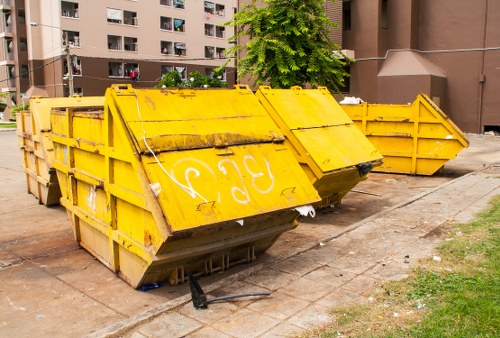
Commercial waste removal in Anerley should give local firms a straightforward way to deal with office, retail and workspace rubbish without disrupting the working day. This page focuses on practical, regular and one-off removal of business waste, with attention to the sort of mixed materials that can build up in back rooms, storage areas and shared premises. The aim is simple: keep commercial spaces clear, compliant and easier to use, while separating reusable, recyclable and residual waste sensibly.
We handle a wide range of business waste streams, from everyday refuse and packaging to clearance work linked to moves, refurbishments and end-of-tenancy changes. Where items need to be sorted before removal, we can work through them in a tidy and methodical way. For a clear breakdown of service options, see our business waste removal page, which sits alongside the broader removal work described here.
If you need commercial waste cleared in Anerley, the right approach depends on volume, access, item type and how quickly the space needs to be usable again. Tell us what is there, where it is and how the site is accessed, then you can request a quotation with confidence. If you are comparing services, it is also sensible to check what can be taken, what needs separate handling and whether the job involves simple collection or a fuller clearance.
Business waste collected from offices, shops and shared premises
Business waste collection is often the most efficient option when waste accumulates gradually and needs removing without interrupting staff or customers. Offices may need clearance of paperwork, packaging, broken furniture, filing units and general rubbish. Shops and hospitality premises may have cardboard, display waste, storage overflow and mixed non-food waste. Our commercial removals are designed to keep those streams moving out of the building in an orderly way, rather than leaving them stacked in corridors or loading areas.
Where a premises produces recurring waste, the most useful plan is usually the one that fits the shape of the site and the type of material being produced. An office with several floors may need a different approach from a compact retail unit or a unit above a parade of shops. We can also support clearer separation of recyclable material where it is practical to do so, which is often helpful when businesses want a neater handover after a clear-out. If you need to compare related options, the office clearance page is a useful place to review work for desks, chairs, storage and workspace contents.
When a collection is enough
A collection is usually suitable when the waste is already gathered, bagged or boxed and the main task is removal. That can suit ongoing housekeeping, periodic tidying or a build-up after stock changes. More involved clearances are better when items are spread through several rooms, when large pieces need lifting from awkward areas, or when the site includes a mixture of furniture, office equipment and loose waste that needs sorting on arrival.
Clearance for furniture, fittings and bulky commercial items

Many commercial clearances involve bulky items rather than simple bagged waste. Desks, chairs, reception furniture, shelving, cabinets and storage units may all need removing when a business reconfigures its space or replaces worn-out items. Our furniture disposal and clearance work is intended for those situations where the waste is still usable as material, but no longer useful to the business. We remove items carefully so that access routes, shared entrances and common areas are not left cluttered.
For premises that are changing layout, bulky waste is often only one part of the job. The clearer the brief, the easier it is to separate loose rubbish from larger fittings and to avoid unnecessary disruption. If your requirements are mainly about furniture, the furniture clearance page gives a more focused view of that service, while the broader commercial work here covers mixed premises and business waste of different kinds.
Furniture, storage and dismantling considerations
Some items can be taken away as they stand; others may need basic dismantling before removal. This is common with partition furniture, modular shelving or fitted-looking pieces that are actually freestanding. In practical terms, it helps to know whether an item is to be removed intact, broken down for access, or separated from other waste first. Keeping that distinction clear often makes the quotation stage more accurate and prevents unnecessary delay on the day.
Waste removal for refurbishments, fit-outs and end-of-tenancy work
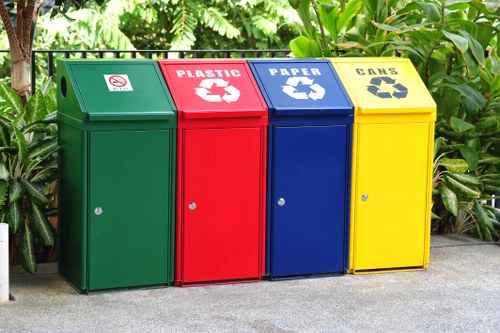
Commercial waste removal is often most useful during a change of use, refurbishment or lease handback, when premises collect a mixture of packaging, offcuts, broken fixtures and unwanted contents. That kind of work can involve far more variety than everyday waste, so the method needs to be adaptable. We can remove mixed waste arising from room reconfiguration, strip-out work or a partial clean-out, provided the material is suitable for removal and properly described in advance.
For landlords, tenants and managing agents, the main concern is usually to leave the site clear, orderly and ready for the next stage. That may mean removing old furniture, cleaning out storage rooms, taking away redundant equipment or clearing a unit after occupation changes. Where the job is centred on premises emptying rather than routine rubbish, our home clearance and house clearance pages show how clearance work is structured for contents removal, and similar principles often apply when business spaces need to be cleared in stages.
Refurbishment waste is often best managed by grouping items before removal, especially when packaging, timber, metal and general rubbish are mixed together. If your site also includes old appliances or specialist waste, it is worth separating those items from ordinary commercial waste at the outset. Clear sorting at the start can make a later collection simpler and may also reduce the need for a second visit for different waste types.
Materials that need extra care
Not every item from a business premises can be treated as ordinary rubbish. Some materials require extra care because of handling, contamination or legal disposal requirements. Examples can include sharp waste, chemicals, contaminated items and certain electrical equipment. These should be identified before removal so that the correct method can be used. When waste needs separate handling, that is usually better discussed early, rather than assumed to fit into a standard collection.
There are also items that may be bulky without being simple, such as appliances, fridges and sofas from commercial lounges, staff rooms or furnished lets. If those items form part of the job, it helps to confirm them clearly. The dedicated fridge and appliance removal page and the mattress and sofa disposal page set out those item categories more specifically, while the commercial service here remains the broader option for mixed business waste.
- Separate ordinary rubbish from specialist waste where possible.
- Identify any items that may be difficult to carry or dismantle.
- Note whether the clearance includes fixtures, fittings or loose contents.
- Check access points if items must pass through shared or narrow areas.
How quotations are usually shaped

Quotation work for commercial waste removal normally depends on a handful of practical factors rather than a single fixed formula. The overall volume matters, but so do item type, ease of access, labour involved and whether the waste must be sorted on site. A straightforward loading job can be very different from a clearance where items are spread across rooms, stored in loft-like spaces or mixed with furniture that needs separating from general rubbish.
It is useful to give a clear description of what needs removing, how the premises can be accessed and whether there are any limitations such as shared stairwells, restricted parking or floor-by-floor loading. Photos can be helpful when you are requesting a quote, but they are most useful when they show scale clearly and include the main item types. For a closer look at pricing structure, our pricing and quotes page explains the sort of information that helps shape an accurate commercial estimate.
Useful details to include: approximate quantity, types of waste, any heavy items, where the waste is located, and whether the job is a one-off or part of a larger programme. If the site also has sensitive materials or items that must be left in place, mention that too. The more clearly the waste is described, the easier it is to match the right service to the job.
Recycling, reuse and responsible disposal
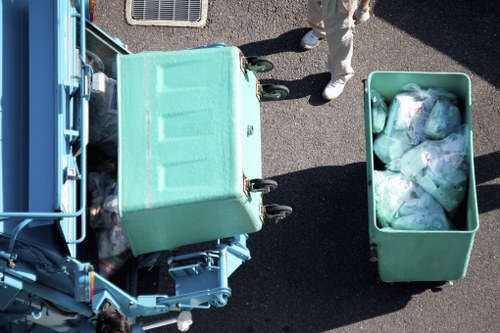 When commercial waste is removed, the question is not only what leaves the building, but how it is dealt with afterwards. Responsible disposal means separating suitable materials for recycling where practical and treating the remainder in an orderly way. Cardboard, metals, some furniture materials and selected office items may all be candidates for sorting, depending on condition and composition. The exact method always depends on the waste itself, not on assumptions made in advance.
Businesses often prefer a clearance process that keeps usable items apart from damaged or contaminated material. That can be particularly important when a premises contains mixed contents from several departments or when a unit has been used for storage over time. Our approach to recycling and disposal is described in more detail on the recycling and sustainability page, which sits alongside the practical collection work offered here.
Where material includes confidential paperwork or files, it should be handled separately from general waste. The confidential shredding page covers that specialist need. For broader commercial waste, the key point is to keep the stream accurate from the outset so that the removal process stays efficient and the destination for each type of material is chosen appropriately.
Preparing a commercial site for removal
There are two practical stages that help most commercial removals run smoothly. First, identify what is going and what is staying; second, make the site as accessible as possible without moving items unnecessarily. If the waste is already gathered into a store room, reception corner or loading point, that is helpful. If it is spread across several floors, a short written summary can be just as useful as a photo when you ask for a quotation.
For larger jobs, it is sensible to note any timing constraints, building rules or access arrangements before the collection is booked. Some premises can only be accessed at certain times, while others involve managed entrances, lifts or loading bays. Where the removal forms part of a wider office or building change, the builders waste clearance page is a relevant reference point for debris, offcuts and residual material from works, even if the site remains commercial rather than a building project.
What helps us understand the job
Three details are especially useful: the kind of waste, the amount, and the access route. After that, it helps to know whether the job can be completed in one visit or whether it is likely to be staged. That information supports a more accurate quotation and helps prevent the common problem of underestimating how much sorting or carrying is involved.
About Anerley
Anerley is a district in the London Borough of Bromley, in southeast London, and it sits close to the boundary with the London Borough of Croydon. The name is generally linked to the mid-nineteenth century and to the area’s development during the railway era, when routes and stations helped shape the pattern of growth around Crystal Palace and the surrounding suburbs. Anerley station remains one of the local reference points, and the area’s identity is tied to that transport history as much as to its residential streets. The district is compact, but it forms part of a wider urban patchwork that includes Penge, Crystal Palace and Beckenham at nearby edges.
One of the best-known landmarks connected with the district is Anerley Town Hall, a Victorian building that has long been part of the local streetscape and reflects the architectural character of the period in which the area expanded. The nearby Crystal Palace Park is also significant to the broader neighbourhood context, with its landscaped grounds, historic associations and modern leisure role. While the great glass exhibition building itself no longer stands, the park retains traces of that past through its setting, scale and public use. Streets in and around Anerley include terraces and mixed urban housing that reflect successive phases of suburban development rather than a single planned design.
Green space is a notable part of the local environment. South Norwood Country Park lies close by, and there are smaller open areas and tree-lined streets that break up the built form. The area is also shaped by its position on routes that connect southeast London with central districts, giving it a practical commuting character alongside its residential life. As with many parts of inner and outer London that grew around rail connections, Anerley is best understood through layers: Victorian expansion, transport change, local civic buildings and the continued use of parks and streets as everyday shared spaces.
Commercial waste clearance for changing premises
When business premises change hands, get reorganised or prepare for refurbishment, the waste left behind is often mixed and uneven. Some of it is light and easy to move; some of it is awkward, broken or stored in places that are hard to reach. This service is designed to deal with that mix in a practical way, so the space can move on to the next stage without waste becoming a separate problem. It is especially useful when the job is too varied for a simple bin emptying arrangement.
We also support clear-outs where items are no longer being used but remain on the premises because they have been left in storage, forgotten after a fit-out or replaced over time. In those situations, the main job is often to restore order rather than to remove one single category of rubbish. If your clearance is linked to a more substantial change in premises layout, you may also wish to look at the broader flat clearance and loft clearance pages, which show how contents can be removed from different kinds of spaces.
Ready to arrange commercial waste removal in Anerley? Send a clear summary of the items, access and timing, and ask for a quotation. If the job is mainly office contents, bulky furniture or a mixed premises clear-out, describe the main elements in plain terms so the estimate can be shaped around the work rather than guessed from a label alone.